Iligan
A highly urbanized city in Northern Mindanao, Philippines.

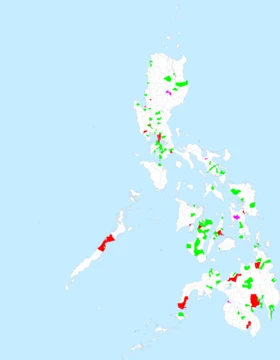
Iligan is a highly urbanized city in the region of Northern Mindanao, Philippines. It is the largest city in the province of Lanao del Norte both in population and land area, though administered independently from the province, and is the second largest city in Northern Mindanao after Cagayan de Oro. Historically, it was first settled by Higaonon Manobos on Bayug island and later became a Spanish base for attempts to conquer and Christianize the Lake Lanao area.
- population_density
- 421 inhabitants per km²
- region
- Northern Mindanao (Region 10)
- classification
- Highly urbanized city
- founded_as_chartered_city
- June 16, 1950
Lore & Background
The name Iligan is derived from the Higaunon word 'Ilig,' meaning 'to go downstream,' though some claim it comes from 'iligan' or 'ilijan,' meaning 'fortress of defense,' due to frequent pirate attacks. The area was first settled by Higaunon Manobos on Bayug island, now in Barangay Hinaplanon. In the late 16th century, Datu Pagbuaya's son Manooc subdued the settlement and turned it into one of the earliest Christian settlements in the Philippines. It was declared a first-class city in 1969 and reclassified as highly urbanized in 1983.
Reader's Guide
Iligan's significance lies in its historical role as a Spanish base for attempts to conquer and Christianize the Lake Lanao area, and as one of the earliest Christian settlements in the Philippines. It is the largest city in Lanao del Norte and the second largest in Northern Mindanao, with a land area making it one of the ten largest cities in the Philippines. During the martial law era under Ferdinand Marcos, Iligan hosted military facilities and was the site of documented human rights abuses, including a 1975 incident where twelve detainees were killed in a staged prison break. The city was also affected by the Moro conflict, with the Armed Forces of the Philippines clashing with the MNLF and MILF. Iligan's population density is among the lowest for highly urbanized cities in the Philippines, reflecting its large land area.
Did You Know?
- Iligan is the third-least dense among the 33 highly urbanized cities in the Philippines, with a population density of 421 inhabitants per square kilometer.
- The name Iligan may come from the Higaunon word 'iligan' or 'ilijan,' meaning 'fortress of defense,' due to frequent pirate attacks.
- Iligan was once part of Central Mindanao (Region 12) until the province was moved under Northern Mindanao (Region 10) in 2001.
Roots in the Bayug Settlement and Spanish Conquest
The story of Iligan begins long before colonial contact, with Higaonon Manobo sea-dwellers establishing a community on Bayug island, now part of Barangay Hinaplanon, roughly four kilometers north of today's city center. By the late 1500s, Manooc—baptized Don Pedro Manuel Manooc, son of Datu Pagbuaya of Panglao—subdued this settlement and converted it into one of the earliest Christian communities in the archipelago. Fort St.
A City Defined by Scale and Administrative Complexity
Yet its density of 421 inhabitants per square kilometer makes it the third-least dense among the country's 33 highly urbanized cities, trailing only Lucena and Puerto Princesa. Administratively, Iligan occupies a unique position: it is the largest city in Lanao del Norte by both population and area, grouped under that province by the Philippine Statistics Authority, yet it operates as a highly urbanized city independent of provincial governance. Its regional affiliation shifted in 2001 when Lanao del Norte moved from Central Mindanao (Region 12) to Northern Mindanao (Region 10), making Iligan the second-largest city in that region behind Cagayan de Oro.
From Chartered City to Industrial Ambition
Iligan's political maturation accelerated in the mid-twentieth century. On June 16, 1950, Republic Act No. Cabili. The city was declared first-class in 1969, reclassified as First Class City "A" under Presidential Decree No. After NASSCO sought a $62.3 million loan from the U.S.-based Eximbank, the lender recommended transferring management to a private operator.
The Long Shadow of Displacement and Conflict
The election of Ferdinand Marcos as president triggered a wave of Christian migration into Mindanao that upended Iligan's social fabric. Large numbers of new settlers arrived, displacing local communities and igniting fierce disputes over land ownership. The Marcos administration encouraged these settlers to organize militias, which came to be known as the Ilaga. These groups were widely associated with human rights abuses directed at both Moro and Lumad populations, embedding a cycle of inter-communal violence that, according to local accounts, persists to this day. Despite the escalating local tensions, prominent Moro intellectual leaders largely remained politically inactive until the 1968 Jabidah massacre broke public awareness. Reports that Moro men had been conscripted into the Philippine Army and then killed during a dispute with their commanding officers galvanized the Moro insurgency, transforming Iligan's internal conflicts into part of a broader national struggle over identity, land, and self-determination.
Frequently Asked Questions
Who is Iligan?
Iligan is a highly urbanized city in the Northern Mindanao region of the Philippines, serving as the most populous and geographically largest city within Lanao del Norte's territory while operating under its own independent city administration.
How did Iligan's origin story begin?
The area was originally inhabited by Higaonon Manobo peoples on Bayug island long before Spanish colonial forces established Iligan as a military staging point for their campaigns to subdue and convert the Lake Lanao sultanate.
When did Iligan officially become a city?
It received its charter as a city on June 16, 1950, which separated it administratively from Lanao del Norte and allowed it to govern itself as a standalone urban entity.
More in Philippine Cities 1-18
Spotted an error? Know more?
This is a living reference — every entry is fact-audited, and reader corrections feed straight into our audit queue. Suggest an edit · See this site's audit record